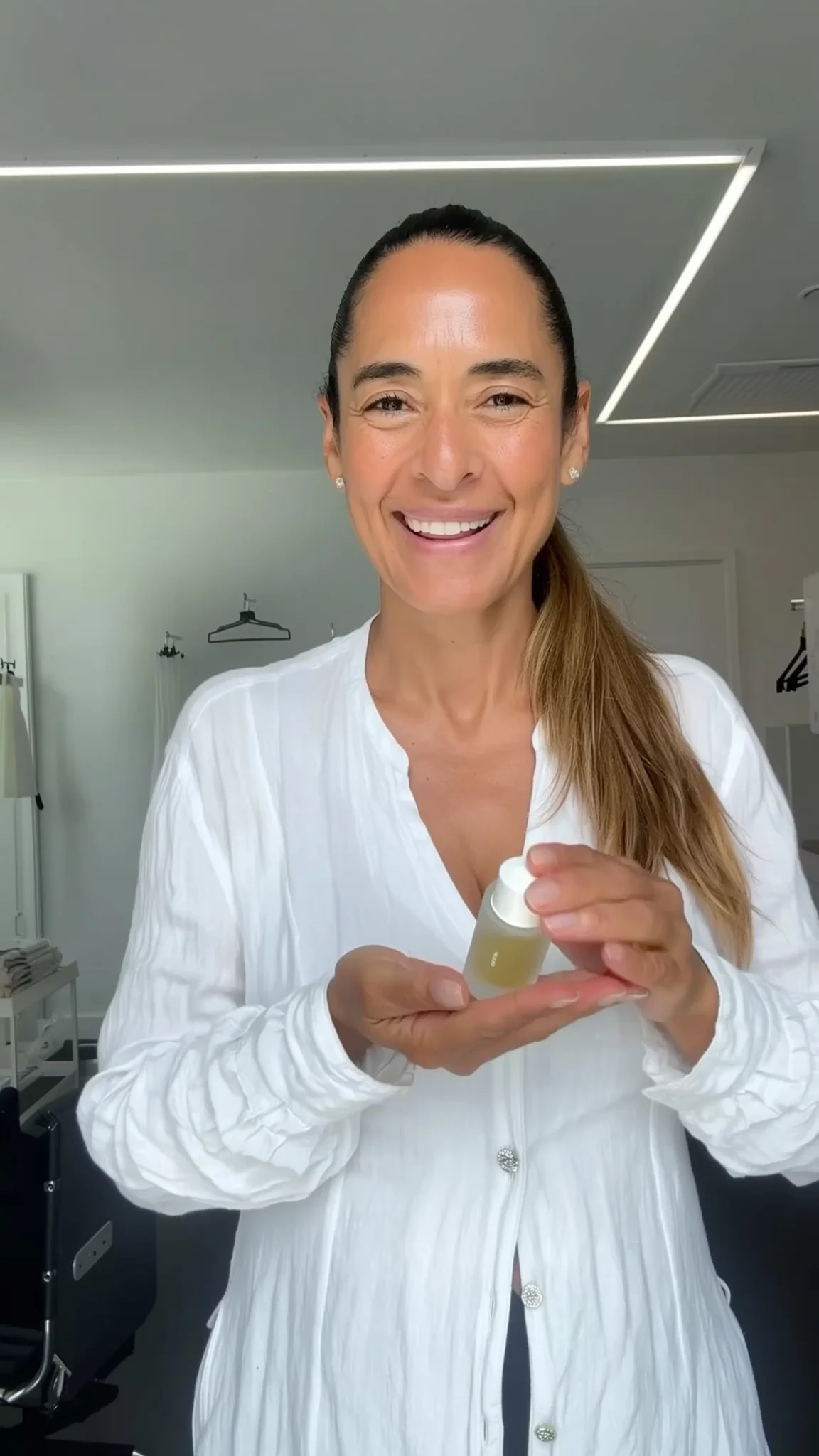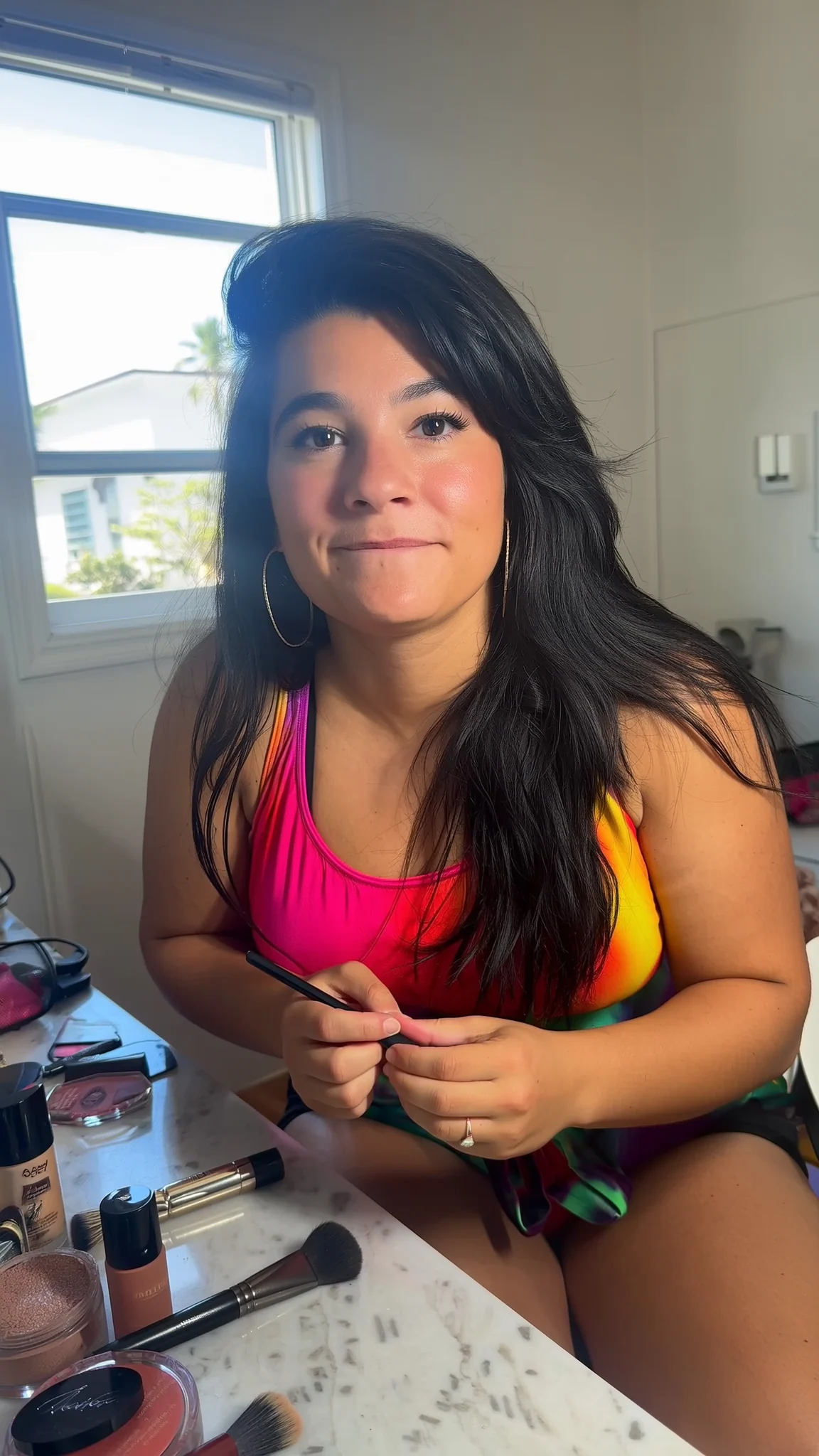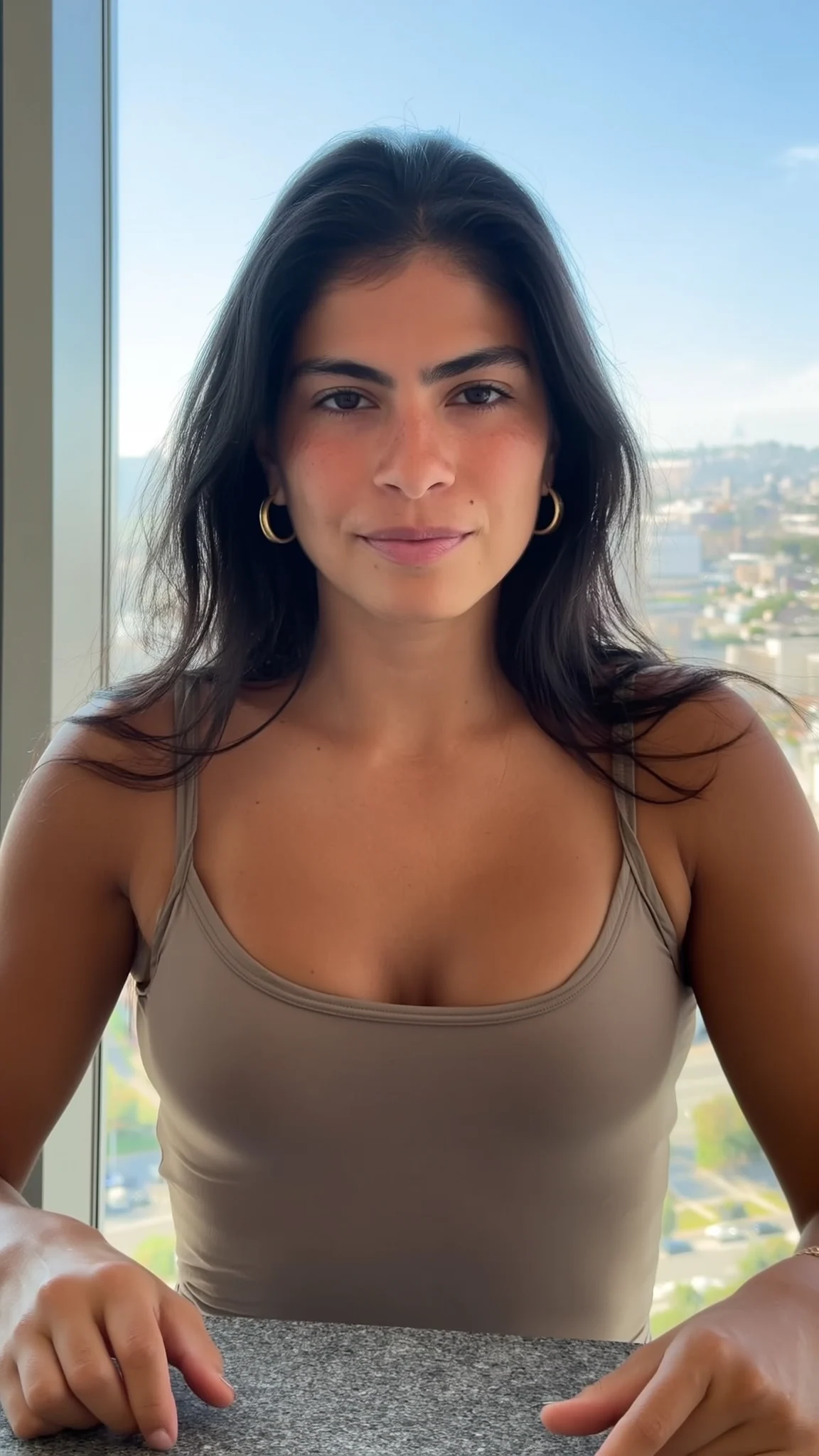
To make a UGC ad, you write a short first-person script with a strong hook, capture a person showing the product (or generate one with AI), then add captions and a clear call to action. The fastest route today is an AI tool: paste a product link and it builds the whole ad, presenter, voiceover, and captions, in about ten minutes. Below is that route, step by step, plus how to do it the manual way.
What you need to make a UGC ad
Every UGC ad, human-made or AI-made, comes down to five ingredients:
- A product and the one benefit you want to sell.
- A script with a scroll-stopping hook in the first three seconds.
- A presenter, a real creator or an AI actor, to say it to camera.
- Captions and edit, so it reads with the sound off.
- Variations, because one ad rarely wins; you test a few hooks.
Two ways to make UGC ads: creators or AI
You can hire a person to film it, or generate it with AI. Same output, very different speed and cost.
| Hire a creator | Generate with AI | |
|---|---|---|
| How it starts | Write a brief, find and vet a creator | Paste a product link |
| Time to first ad | Days to weeks | ~10 minutes |
| Cost per video | $80–500+ | A few dollars |
| Testing 5 hooks | 5 fees, more waiting | 5 quick variations |
| Best for | A specific real story | Speed and volume |
How to make a UGC ad with AI (step by step)
Here is the actual flow in Sparkiz, from a product link to a downloadable MP4. It is seven steps, and the tool does the heavy lifting between them.
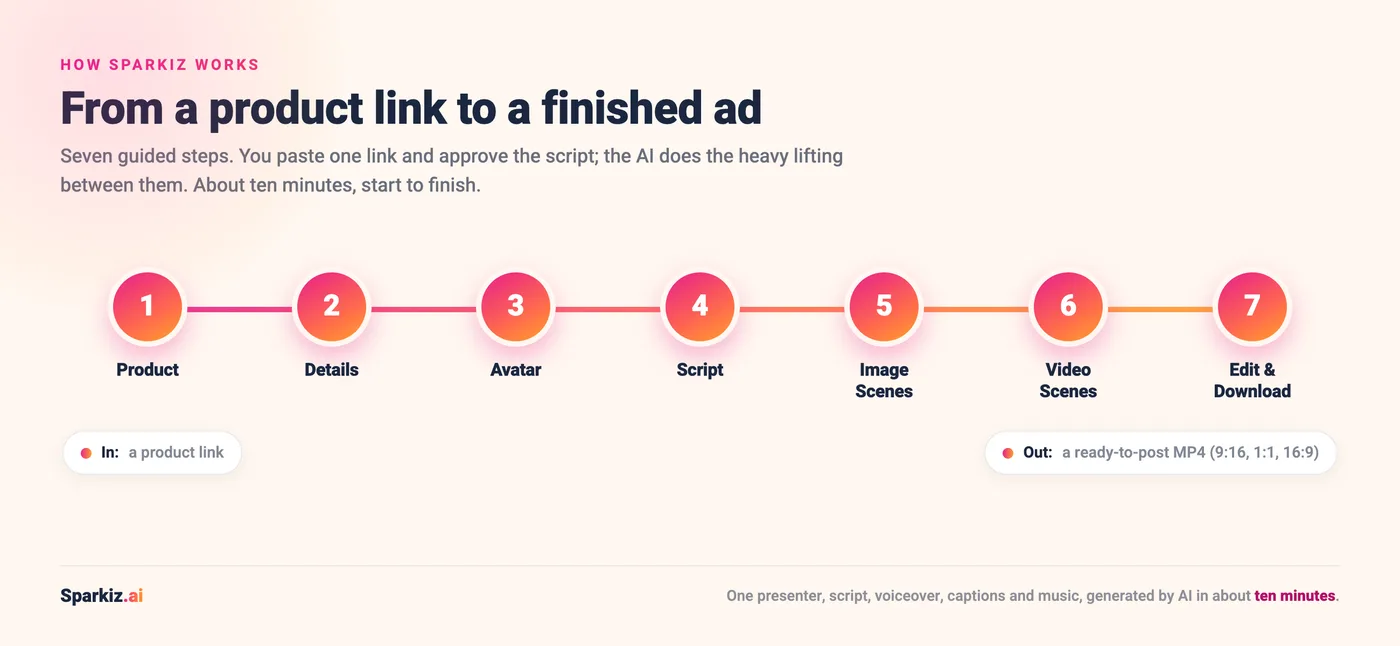
Product
Paste a product page link, or type the product details. This is the only input the ad is built from.
Details
Confirm the key facts and the angle: what the product is, who it is for, and the benefit to lead with.
Avatar
Pick an AI presenter from the actor library that fits your audience, or use a custom avatar.
Script
Review the AI-written first-person script and hook. Tweak the wording or regenerate until it lands.
Image Scenes
The tool lays out the visual scenes, mixing the presenter with product shots and B-roll.
Video Scenes
Scenes are generated into moving video with the voiceover and lip-sync applied.
Edit & Download
Adjust captions, music, and pacing, then export the MP4 in 9:16, 1:1, or 16:9. Ready to post.
Here is a real walkthrough of that process, product link to finished ad:
A real walkthrough: a product link becomes a finished UGC ad. Tap to play.
How to make UGC ads without hiring creators
This is exactly what the AI route solves. You skip the brief, the casting, the shipping of product, the waiting, and the usage-rights negotiation. You paste a link, choose a presenter, and get a finished ad you own outright. For a brand that needs fresh creative every week, that is the difference between one ad and twenty.
How to write a UGC hook that stops the scroll
The first three seconds decide whether anyone sees the rest. A good hook creates curiosity or names a pain, fast, with no logo and no "hey guys". Steal these five patterns and fill in your product:
Write three to five hook variations per product. With AI, each is a quick regenerate, so you are not betting everything on one line.
Pick the right format for the platform
Match the aspect ratio and length to where the ad runs, or it gets cropped and skipped.
| Platform | Aspect ratio | Length |
|---|---|---|
| TikTok | 9:16 | 9–30 sec, hook-heavy |
| Instagram Reels | 9:16 | 9–30 sec |
| Facebook Feed | 1:1 or 4:5 | 15–30 sec |
| YouTube Shorts | 9:16 | up to 60 sec |
Sparkiz exports 9:16, 1:1, and 16:9, so you can produce the right cut for each placement from one ad.
How many variations should you test?
Start with three to five ads that share the product but change the hook or the angle. Run them on a small budget, watch which holds attention past the first few seconds, then put spend behind the winner and make new variations of it. The point is to let cheap tests find the winner before you scale.
Common mistakes that kill a UGC ad
- Opening with a logo or a brand intro before proving value.
- A generic hook that speaks to everyone and lands with no one.
- A static first frame, with no motion to catch the eye.
- The wrong aspect ratio for the placement.
- Burying the main message halfway through the video.
Where AI UGC still falls short
AI is unbeatable for speed, volume, and testing. It is not the answer for everything. When you need a specific personal story, a face your audience already trusts, or a niche only a real person has lived, a human creator still wins. And always follow each platform's rules on labeling AI-generated or synthetic media, and never imply a real person endorsed something they did not. The honest play for most brands: test broadly with AI, then invest in a bespoke creator for the angles that earn it.
Make your first UGC ad in the next 10 minutes
Paste a product link, pick a presenter, and export a ready-to-post ad. First one is $3.
Create an AI ad →How to make UGC ads FAQ
How do I make a UGC ad with AI?
Paste a product link into an AI UGC tool, pick a presenter, approve the script, and export the video. With Sparkiz it is seven guided steps and takes about ten minutes.
Can I make UGC videos without creators?
Yes. AI UGC tools generate the presenter, voiceover, and captions for you, so you never brief, hire, or wait on a creator, and you own full rights to the output.
How long does it take to make a UGC ad?
A creator route takes days to weeks. An AI route takes minutes; a finished Sparkiz ad is usually ready in about five to ten minutes.
How long should a UGC ad be?
Most perform best at 9 to 30 seconds, with the whole hook landing in the first three. Keep it short and lead with the payoff.
The Sparkiz AI team writes about video advertising, UGC, and creating ads that convert, to help brands produce winning creative fast and affordably.
More from the blog →